
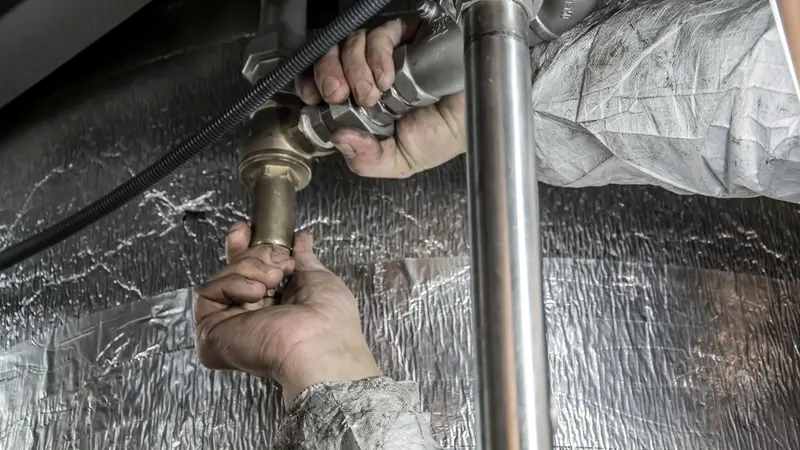
Quick answer
Soak a cloth or kitchen paper in white vinegar and wrap the tap for 30 minutes if it is chrome (10-15 on matt black, gold or copper). Scrub with an old toothbrush, rinse and dry at once with microfibre. Clean the aerator by soaking it in vinegar. For hard limescale use citric acid or a descaler such as Viakal, and never mix bleach with any acid.
What you need
- Old toothbrush
- Microfibre cloth
- Kitchen paper or an old rag
- Toothpick or needle
- Gloves
- Small adjustable spanner, if the aerator is stiff
- Small container to soak the aerator
- White cleaning vinegar (Mercadona, Dia or Carrefour)
- Citric acid powder
- Descaling gel for chrome, such as Viakal
- Plastic bag and rubber band
- Neutral soap for the preliminary step
- PTFE tape, in case the aerator leaks when refitted
Step by step
- 1
Identify the finish of the tap
Check whether it is bright chrome, brushed stainless steel, nickel, matt black, gold or copper. The finish decides the contact time and the product. If in doubt, start with half the time and test on the back.
- 2
Remove soap and dirt
Wipe with a cloth and warm water with neutral soap. Limescale sticks better over soap and grease, and if you do not remove them first the vinegar works less well. Dry the tap.
- 3
Wrap the limescale in vinegar
Soak kitchen paper or a cloth in white vinegar and wrap the spout and base. If it is a fixed tap, you can also tie a bag full of vinegar to the spout with a rubber band, so the limescaled part is submerged.
- 4
Leave it to work according to the finish
On chrome, 30 to 60 minutes. On brushed stainless steel, about 30. On matt black, gold or copper, only 10 or 15 minutes with vinegar diluted half and half with water. Longer can leave marks and remove colour.
- 5
Scrub with the brush
Remove the cloth and brush the joints, the base, around the handle and the spout with the toothbrush. In small corners, use a toothpick carefully, without scratching. Soft limescale comes off like a flaky crust.
- 6
Rinse and dry at once
Rinse with clean water and dry with microfibre. If you leave drops, limescale settles again within minutes and you will have to repeat. Dry until the tap shines.
- 7
Clean the aerator
Unscrew the aerator (the part with the mesh at the end of the spout) by hand, or with a cloth and the spanner if it is stiff. Soak it in vinegar for half an hour, brush the mesh and the holes and refit it. If the flow comes out crooked or with low pressure, it is almost always this.
- 8
Treat hard limescale with citric acid or descaler
If some remains, mix citric acid with a little water to make a paste, spread it on, wait five minutes and rinse. On chrome you can use a descaling gel such as Viakal, following the label. Ventilate the bathroom and wear gloves.
- 9
Check that the tap works
Open and close the handle several times. If it is stiff or drips, limescale has got into the cartridge and it will need to be taken apart (see below). If all is well, wipe the whole tap with a dry cloth.
- 10
Leave a protective layer
On chrome and steel, a drop of baby oil on the cloth gives shine and makes water run off. On matt black or gold, do not use it: it leaves marks. Drying daily after the last use prevents 80% of deposits.
Why limescale forms on taps and which product suits each finish
Limescale is calcium carbonate that hard water leaves as it evaporates. Every drop left on the tap turns into a white mark and, over the days, into a crust. In Alicante, Torrevieja, Elche and Orihuela Costa, which have very hard water, a kitchen or basin tap is covered in limescale within a week if it is not dried.
The right product depends on the finish. Chrome withstands vinegar and commercial descalers. Brushed stainless steel tolerates vinegar, but is always cleaned along the grain. Modern finishes (matt black, gold, copper, aged brass) have a thin coating that strong acids dissolve, and they are cleaned with diluted vinegar, for a short time and with plenty of rinsing.
| Finish | Vinegar | Citric acid | Commercial descaler | Maximum time |
|---|---|---|---|---|
| Bright chrome | Yes, neat | Yes | Yes (Viakal) | 30-60 min |
| Brushed stainless steel | Yes | Yes, diluted | With care | 30 min |
| Brushed nickel | Yes, diluted | With care | Not recommended | 15-20 min |
| Matt black | Diluted 1 to 1 | Very diluted | No | 10 min |
| Gold, copper or aged brass | Diluted 1 to 1 | No | No | 10 min |
| Chrome-plated ABS plastic | Yes | Yes | Yes | 30 min |
How to descale each part of the tap
The base and the spout are cleaned with the soaked cloth, as in the step by step. The aerator needs to be taken off: it is where most limescale builds up and the main reason the flow comes out wide or with low pressure. The handle and the rosette are cleaned with a brush, because limescale hides at the edge.
On pull-out kitchen taps, pull out the hose and clean the pull-out spray head like a small shower head, with vinegar and a brush. For the rest of the shower, see how to clean a shower head. And if the limescale is on the glass, how to clean limescale off a shower screen explains how to do it without scratching.
Take care of the surfaces around. Vinegar and acids damage marble, granite and natural stone on worktops and basins, and wear away cement grout if left on for long. Protect with paper if your tap sits on a worktop of this kind.
Common mistakes when descaling
- Using a green scouring pad or wire wool. They scratch the chrome and, once scratched, limescale grips even more.
- Mixing bleach with vinegar or descaler. Chlorine gas is produced, which is very irritating. One product at a time, rinsing between them.
- Leaving vinegar on for hours on matt black or gold. They lose colour and it cannot be restored.
- Not drying afterwards. Every drop left becomes a limescale mark again within minutes.
- Forcing the aerator with pliers. The thread deforms or the spout is scratched. Use a cloth and the adjustable spanner carefully.
- Thinking the external limescale is the only problem. Limescale also builds up inside the cartridge, where surface vinegar does not reach.
When to call a plumber
If after cleaning the tap it is still stiff, drips from the base or the flow is weak, the limescale is already inside: in the cartridge, the inlet filter or the connections. That is solved by replacing the cartridge or the tap. The steps are in how to replace a tap cartridge and in how to fix a dripping tap.
At Manitas Costa, fixing a dripping tap costs €40-70 and replacing a tap €45-80 labour. We look at it beforehand by WhatsApp with a photo and give a fixed price. We arrive in 20-45 minutes in Valencia, Alicante, Torrevieja and Benidorm.
More information in plumber in Valencia and Alicante and plumber prices. If your tap is the shower one, there is also how to replace a shower tap. We do not touch boilers or water heaters.
Limescale and salt air: the routine that works on the coast
The best way to remove limescale is not to let it form. Dry the tap with a cloth after the last use of the day: it takes ten seconds. Once a week, wipe with a cloth and diluted vinegar and, once a month, clean the aerator. With that routine, limescale never gets the chance to harden.
In holiday lets in Benidorm, Torrevieja or Calpe, where taps go weeks without use, limescale and salt set harder. Leave a microfibre cloth in each bathroom and ask guests to dry the tap when they finish. On terraces and in gardens, the outside tap turns greenish from the salt: clean it with vinegar and a brush, and protect it with a thin layer of petroleum jelly on the thread.
If limescale is a problem throughout the home, a water softener or a filter at the water entry reduces it in taps, cistern and appliances. To check taps and cisterns before the season, we have a plumber in Alicante and a plumber in Torrevieja.
Frequently asked questions
What is best for removing limescale from taps?
White cleaning vinegar, on a cloth or in a bag for half an hour, and an old toothbrush. It is cheap and safe on chrome and steel. For harder limescale, citric acid or a descaling gel such as Viakal. On matt black or gold, diluted vinegar and only ten minutes.
Does vinegar damage chrome?
No, as long as you do not leave it for hours. Chrome withstands vinegar for half an hour or an hour, provided you rinse and dry afterwards. What damages chrome is abrasive scouring pads and chlorine products mixed with acids. On matt or gold finishes, cut the time and dilute the vinegar.
Why is there little water from the tap even though I cleaned the outside?
Almost always it is the aerator with its mesh blocked by limescale. Unscrew it and soak it in vinegar for half an hour. If the flow is still low, check the tap's inlet filter and the angle valves. If all is clean, the cartridge may have limescale inside.
How often should taps be descaled?
In hard water areas such as Alicante, Torrevieja or Elche, wipe with vinegar weekly and clean the aerator once a month. In Valencia, every two weeks. Drying the tap every day does the most to cut the work, because limescale forms as drops evaporate.
Can limescale be removed from a matt black tap?
Yes, with care. Use vinegar diluted half and half with water or very dilute citric acid, ten minutes at most, rinse and dry. Never use scouring pads or strong commercial descaler. If the finish has already lost its colour or lifted, it cannot be restored and the tap would need replacing.