
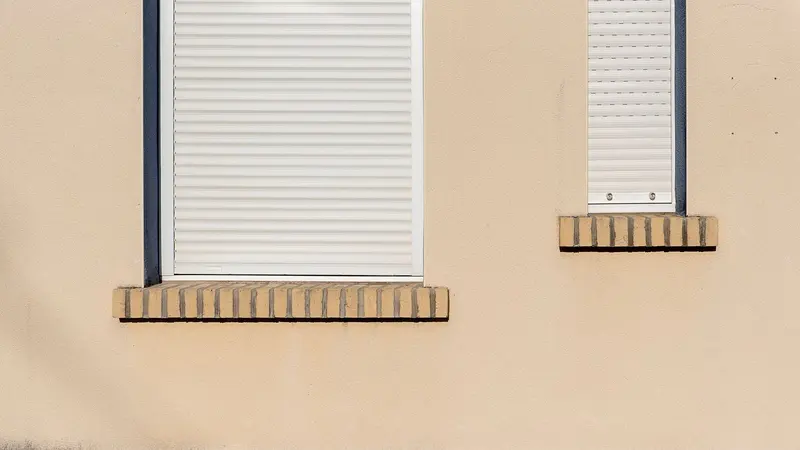
Quick answer
Lower the shutter, vacuum the dust with a brush attachment, wipe slat by slat from top to bottom with a microfibre cloth and lukewarm water with mild soap, scrub any marks with a soft brush, rinse with a clean cloth and dry. Clean the guides with a brush and the box with a vacuum cleaner. Do not use bleach on aluminium or solvents on PVC. If it is motorised, switch off the power before cleaning the box.
What you need
- Vacuum cleaner with a soft brush and crevice tool
- Microfibre cloths or a microfibre glove
- Shutter-cleaning tongs or a long-handled brush
- Bucket and an old toothbrush
- Stable stepladder (only for indoor sections)
- Rubber gloves
- Lukewarm water with mild soap or washing-up liquid (Mercadona, Bosque Verde or similar)
- Diluted white vinegar for limescale marks (never mixed with bleach)
- Silicone spray for the guides
- Dry cloth or kitchen roll
- Bag for the dirt
Step by step
- 1
Lower the shutter and check
Lower the shutter fully and check the material of the slats. If it is motorised, switch off the breaker for that circuit at the consumer unit before cleaning the box or the guides. If the box has mould, deal with the cause first.
- 2
Vacuum off the dry dust
Go over it with the vacuum cleaner and soft brush from top to bottom on both faces you can reach. Take off the dry dust before wetting: mud is harder to clean. Use the crevice tool for the guides and box.
- 3
Mix the cleaning solution
In a bucket, mix lukewarm water with a few drops of mild washing-up liquid. For limescale or salt marks, add a splash of diluted white vinegar. Do not mix with bleach or ammonia.
- 4
Wash the slats from top to bottom
Wet the cloth, wring it out well and wipe slat by slat from top to bottom, without letting it drip. If you use shutter tongs, run them gripping each slat. Work in sections of 50 cm.
- 5
Scrub the marks
With the old toothbrush and the solution, scrub black marks and salt deposits. Do not scrub hard on aluminium or use a scouring pad. Rinse the brush often.
- 6
Clean the outside
If the window allows it, raise the shutter to half height and clean the outer section from inside, or do it with the tongs or a telescopic window cleaner. If not, raise and lower a hand's width at a time and repeat. Do not lean out.
- 7
Rinse with clean water
Go over the whole shutter with a clean, well wrung-out cloth to remove the soap. Repeat until no traces are left. Do not use a hose or a jet of water.
- 8
Dry and clean the guides
Dry the slats with a cloth. Run the brush and vacuum cleaner along the side guides to remove sand and dirt, and dry them. Wet guides jam.
- 9
Clean the box inside
With the shutter raised, open the box cover if it has an access panel and vacuum out the dust with the crevice tool. If you see a broken strap, rust or a nest, stop: call a technician.
- 10
Lubricate and test
Apply a little silicone spray to the guides and axle, wiping off the excess. Raise and lower the shutter three times and check that it runs without jamming.
What dirties a shutter and what material you have
The type of dirt and the material of the slats decide the method. Dust and sand build up on the slats and in the guides. Pollution and rain leave black marks. Salt leaves a white, sticky film on the seafront, and limescale from raindrops stains dark slats. Before you start, check whether your shutter is PVC, aluminium or timber.
PVC takes water with mild soap and a dash of diluted vinegar. Lacquered aluminium does too, but it will not stand up to bleach or rough scouring pads, which scratch it or leave white stains. Timber (alicantina or mallorquina louvred shutters) wants very little water, an almost dry cloth and wax afterwards. If it is another material, test in a corner.
| Material | What to use | What to avoid |
|---|---|---|
| PVC | Lukewarm water, mild soap, cloth | Solvents and rough scouring pads |
| Lacquered aluminium | Water with mild soap and microfibre | Bleach and strong acid products |
| Timber | Almost dry cloth with mild soap | Soaking, steam |
| Aluminium with polyurethane foam | Water with mild soap | Pressurised water getting into the slats |
How to reach the outside from indoors
On a first floor or higher, do not lean out of the window. There are three safe ways to clean the outside of a shutter from indoors: with the window open and the shutter at half height, so that the outer section is visible and within reach from inside; with a telescopic-handle window cleaner; or with cloth-covered tongs (sold as shutter cleaners, with microfibre pads) that grip the slats on both faces and are run from top to bottom.
If the window is tilt and turn or sliding and you cannot lean out, do the outside as you raise and lower: raise the shutter a hand's width, clean the slats now visible from inside, and repeat. Every slat has two faces and the tongs clean both in one pass. Never lean beyond the sill or stand on a chair. If the flat is high up or you cannot reach, that is the moment to call us.
Common mistakes when cleaning roller shutters
These are the ones that cost the most in slats, guides and mechanism:
- Wetting them with a hose or pressure washer. Water gets into the box, rusts the axle and ruins the strap. Use a damp cloth, not a jet.
- Mixing bleach with vinegar or ammonia. It gives off toxic gases. Use one product and ventilate.
- Scrubbing aluminium with a scouring pad. It scratches and dulls it. Use microfibre or a soft sponge.
- Raising and lowering a wet shutter. Sand and dirt get into the guides and jam it. Dry it first.
- Forgetting the guides and box. That is where the sand and dust that slow the shutter build up. Vacuum and brush them.
- Lubricating with cooking oil. It attracts dust and sand. Use silicone spray, just a touch.
When to call a professional
It is worth calling if the shutters are on a high floor, if there are many windows, if sun and dirt have left permanent marks, if slats have to come out to clean the box inside, or if, while cleaning, you discover that something is wrong: broken slats, a worn strap, bent guides.
Our roller shutter repair service checks and greases the mechanisms in one visit. We do the cleaning with the handyman by the hour service: first hour €35-45 and €28-35 per hour after that, with a fixed price by WhatsApp. If you see a frayed strap while cleaning, replacing it costs €35-60; see how to replace a roller shutter strap and how much it costs to repair a roller shutter. We arrive in 20-45 minutes in Valencia, Alicante, Torrevieja and Benidorm, with a 6-month written guarantee.
Salt air, sun and sand: cleaning shutters on the coast
On the seafront, salt forms a white layer that, if not removed, corrodes aluminium and jams the guides. The ideal is to rinse the shutters with fresh water every 1 or 2 months in Torrevieja, Benidorm, Dénia or Jávea, and thoroughly once a year. Summer sun dries out PVC, so do not clean when the slat is hot: the soap dries and leaves marks. Do it in the morning or late afternoon.
While you are cleaning, check the other exposed parts, such as the fly screens. If you see mould in the shutter box or black marks on the wall beneath, it is condensation damp: dry it and see how to remove mould from a wall. And if the shutter moves with difficulty, it may be a fault rather than dirt: how to fix a roller shutter.
Frequently asked questions
How do I clean very dirty roller shutters?
Vacuum off the dry dust, soften the dirt with lukewarm water, mild soap and diluted vinegar, and wipe slat by slat with microfibre and a soft brush. Repeat for black marks. Rinse well and dry. Do not use bleach on aluminium, rough scouring pads or a jet of water that gets into the box.
How do I clean the outside of roller shutters from indoors?
With the shutter at half height and the window open, clean the visible section from inside, using a telescopic-handle window cleaner or microfibre shutter tongs that grip the slats on both faces. Never lean out beyond the sill. On high floors it is better to call a professional.
Can I use bleach to clean roller shutters?
On white PVC, diluted, carefully and rinsing well. On lacquered aluminium, no: it stains and dulls it. Never mix it with vinegar or ammonia, because they give off toxic gases. For almost everything, lukewarm water, mild soap and microfibre are enough, and they are safer for the slats and joints.
How often should roller shutters be cleaned?
Dust them every month and give them a thorough clean every 6 to 12 months. On the coastal seafront, with salt and sand, rinse with fresh water every 1 or 2 months and clean the guides and box at least twice a year. That stops them jamming and makes them last longer.
How much do you charge to come and clean and check the shutters?
We work by the hour: the first hour is €35-45 and after that €28-35 per hour, with a fixed price by WhatsApp. If the check shows the strap needs replacing, that is €35-60, and strap and winder €40-70. We arrive in 20-45 minutes in Valencia, Alicante, Torrevieja and Benidorm.